BACKGROUND
Driving copilot systems that communicate with drivers represent an emerging frontier in vehicle automation designed to enhance safety, user experience, and vehicle control. These systems go beyond the traditional role of passive driver assistance by acting as active copilots that understand, interpret, and respond to driver behavior and situational context through natural language or multimodal interaction. This conversational capability enables real-time feedback on driver state—such as distraction or drowsiness—alongside providing adaptive, context-aware guidance for vehicle maneuvers and traffic conditions. By integrating advanced driver monitoring, artificial intelligence, and vehicle-to-vehicle (V2V) communications, these systems aim to create a seamless human-machine interface within the autonomous driving ecosystem. As autonomous vehicles evolve, enabling effective dialogue between vehicle and user emerges as a key technology to build trust, improve compliance, and ensure safer and more comfortable driving experiences.
SUMMARY OF TECHNOLOGY
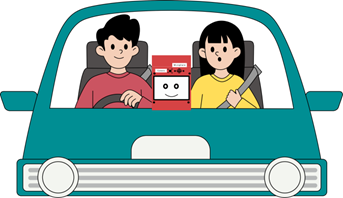
The assistive and cooperative driving copilot is an integrated system that enhances vehicle and driver safety through real-time, multimodal sensing and collective decision-making. This innovation combined advanced driver state monitoring—through detecting distraction, drowsiness, and individualized driving behavior—with optimization algorithms facilitating coordinated maneuvers such as lane changes, platooning, and intersection crossing across mixed human and autonomous vehicles. Additionally, the copilot encompasses a context-aware adaptive advisory interface providing personalized, socially aware driver guidance to reduce cognitive load and improve compliance. Lastly, the copilot increases road safety through a layered vehicle communication network to maintain holistic, up-to-date situational awareness.
POTENTIAL AREAS OF APPLICATION
- Retrofit Automotive Safety Equipment
- Vehicle Platooning: Coordinated Fleets
- Insurers- Driving Data, Collision & Distraction Avoidance
- Handicap/Disability/Elderly Adaptive Driving
MAIN ADVANTAGES
- Real-time Distributed Cooperative Optimization
- Multimodal Driver & Vehicle State Sensing
- Adaptive Advisory Interface
- V2V Communication
- Cooperative Lane Changing & Merging in Mixed Driving Scenarios