BACKGROUND
Recurrent Clostridioides difficile infection (rCDI) remains one of the most persistent challenges in hospitals and long-term care, where antibiotic disruption of the gut ecosystem weakens natural colonization resistance and allows this toxin-producing pathogen to re-establish itself. Despite widespread use of broad-spectrum antibiotics, single-strain probiotics, and fecal microbiota transplantation (FMT), current interventions often fail to restore the specific microbial functions and community structures needed to prevent relapse. Clinical and metagenomic studies increasingly show that microbial interaction networks, including metabolic cross-feeding and competitive exclusion, play a decisive role in determining whether the gut environment becomes permissive or suppressive to C. difficile. As a result, there is a growing demand for precise, mechanism-informed microbiome therapeutics that can reliably rebuild a resilient microbial community rather than relying on undefined or empiric approaches. This unmet need has created a clear opportunity for next-generation, standardized interventions capable of restoring durable resistance in high-risk patients.
SUMMARY OF TECHNOLOGY
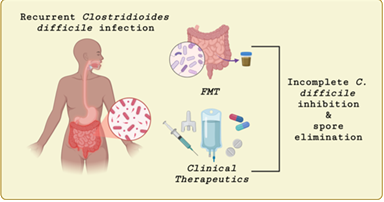
Oklahoma State innovators have created a healthy human microbe-derived, defined live biotherapeutic that uses a rationally selected consortium of commensal gut bacteria to suppress C. difficile while preserving beneficial microbes. By integrating continuous-flow bioreactors, generalized Lotka-Volterra modeling, genome-scale metabolic reconstruction, and patient metagenomics, specific inter-species interactions and metabolic pathways that drive C. diff. resistance are identified. This allows us to move beyond empirical FMT and single-strain probiotics, toward a standardized manufacturable product with a clear mechanistic rationale, strong in vitro suppression data, and in vivo relevance supported by cohort analyses.
POTENTIAL AREAS OF APPLICATION
- Elderly Care & Long-Term Care Facilities
- Hospital Infection Control Programs
- Gastrointestinal Disorder Management
- Medical Device Manufacturing
- Clinical Research Organizations
- Diagnostic Testing Services
MAIN ADVANTAGES
- Targeted microbial therapeutic based on defined gut bacteria communities
- Identification of biomarkers to predict treatment success
- Enhanced understanding of microbial interactions critical for suppressing CDI
- Combination of metabolic and genomic analyses for rational therapy design
- Potential for safer and more effective alternatives to fecal microbiota transplantation
- Supports restoration and maintenance of healthy gut microbiome diversity
STAGE OF DEVELOPMENT